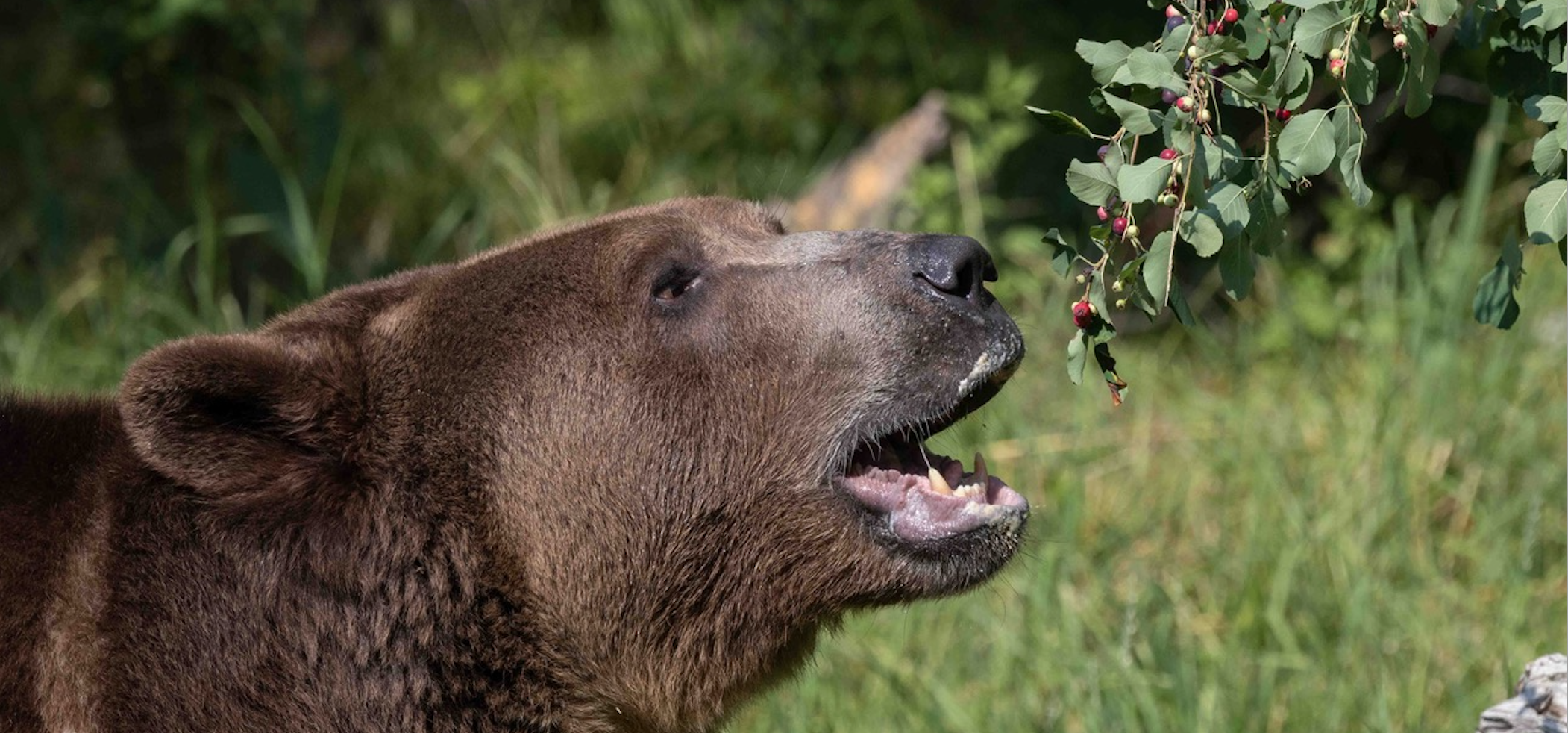
Bruno is one of the most impressive residents at Triple D. A powerful grizzly bear with a calm and steady temperament, he embodies the wild spirit of the Rocky Mountains. Trained with care and respect, Bruno participates in carefully managed photo sessions that give photographers the majesty of a grizzly in natural settings. His massive build, thick coat, and expressive features make him a favorite subject for both wildlife photographers and artisits.
Above all, Bruno’s well-being comes first. At Triple D, we are committed to providing the highest standard of animal care, ensuring that every session with Bruno is both safe and unforgettable.
Scientific Name
Ursus Arctos Horribilis
Common Names
Grizzly Bear, North American Brown Bear, Silvertip Bear, Grizz
Description
The grizzly bear (Ursus arctos horribilis), often called the “silvertip bear” for the light-colored tips on its fur, is one of North America’s most iconic wildlife species. A subspecies of the brown bear, grizzlies are found throughout Alaska, western Canada, and parts of the northwestern United States, including Montana.
Adult males can weigh between 400–800 pounds, with some reaching even larger sizes, while females are generally smaller. Known for their muscular build, distinctive shoulder hump, and long claws, grizzly bears are powerful animals well adapted for digging, foraging, and survival in rugged landscapes.
Despite their size and strength, grizzlies are omnivores. Their diet ranges from roots, berries, and plants to fish, insects, and occasionally larger prey. They play a vital role in maintaining healthy ecosystems, spreading seeds and helping regulate animal populations.
Grizzly bears symbolize both the beauty and wildness of North America’s wilderness. Through respectful care and responsible opportunities like those at Triple D, people can safely connect with these magnificent animals and gain a deeper appreciation for their place in nature
Filming Site
Bruno’s filming site is set right here on the Triple D ranch, offering photographers a safe and natural environment to capture stunning images of a grizzly bear. The area is a dynamic mix of trees, brush, and open spaces, giving you a variety of backgrounds in a single location.
The shaded forest edges provide moody, textured scenes, while the open clearings allow for full-body shots with natural light highlighting Bruno’s massive frame. With room to move and play, Bruno can showcase authentic behaviors that bring energy and realism to every photo or film session.
This versatile setting ensures that no two shots are alike, whether you’re after dramatic close-ups or wide, storytelling images that capture the spirit of the wild.
When Should You Visit
Bruno is available for filming and photography sessions from spring through fall, when he’s active and enjoying his outdoor habitat here on the ranch. Each season brings its own unique look to the site — from fresh greenery in the spring, to long sunlit days in summer, and finally the warm golden tones of autumn.
During the winter months, like all grizzly bears, Bruno takes time to rest and hibernate. This natural cycle ensures he remains healthy and energetic for the following year’s sessions.
Planning your visit between spring and fall guarantees the best opportunities to capture Bruno’s strength and personality in a variety of natural settings.
What To Expect
The Grizzly Bear begins the session with a lot of energy, exploring the filming location. Shutter speed is a priority to capture the action. The trainer has placed food around the site, taking advantage of the natural features including trees and logs.
As the session progresses the wolves will slowly burn off its excited energy. Towards the end of the session the wolves may pose in front of the photographers standing up on and showing it’s teeth.
What You Should Know
Basic skills with your camera to:
- set exposures for various conditions ranging from bright sunlight to shade
- using higher shutter speeds and continuous auto focus to photographic action
If you use a tripod or monopod you should know how to rotate between horizontal and vertical compositions.
What You Should Bring
Initially the Grizzly Bear movement may be quick or in a shady spot, therefore a larger aperture is more beneficial than focal length. The distance to the wolves will vary, at times being quite close, thus a zoom lens is more versatile than a large prime lens. A 100-400 works well in all situations. As the session progresses the Grizzly Beat will be closer and a shorter lens is beneficial. A 24-70 (or similar focal length) is ideal for when the Grizzly Bear is standing up. A slightly longer lens, like a 70-200, may be preferred when it is snarling.
Extra batteries and memory cards as there is nothing worse than running out. Unlike searching in the wild, a Triple D wolves model is present throughout the entire filming session and many photographers take more photos in several minutes than they would in an entire day.
A second camera:
- provides a backup should an equipment failure occur.
- allows you to continue the session when a battery is depleted or a memory card is full
- allows you to continue when your buffer is full
- can be equipped with different lenses (macro and zoom)
- can be set with a different exposure to easily transition between darker exposures and high-speed action
First time attendees are often surprised by the large number of photographs they capture. Secondary storage devices are recommended.
If you prefer using a tripod than a quick release system is recommended as you may want to handhold your camera to capture some of the action.
The west side of the Rocky Mountains can experience precipitation year-round, ranging from rain to sleet to wet snow. Rain protection for your equipment will reduce your anxiety in these situations.
What You Should Do
Bring everything you need, including memory cards and batteries, to the photo session. You cannot leave the shooting compound once filming begins.
We’ve all done it one time or another, we’ve all been guilty of chimping. Minimize chimping during the photo session as it decreases battery life and increases the likelihood of missing a great shot.
Do not touch the animal, the operating permits prohibit public contact with the Triple D animals.
Staying together as a group helps the trainer guide the animal to look in your direction. Consider moving within the group to capture photos from a different perspective and allow others to photograph from your position.
Do not call out to the animal or make any noises in order to get its attention. A successful session is only possible when the animal is focused on the trainer.
Silence your phone and do not answer or make phone calls.
Participant covenants and agrees that it will not photograph nor distribute, publish or make public in any manner photographs of:
(1) Any of Providers facilities, including, without limitation, cages, pens, or exercise areas;
(2) Any of the Subject Models when on a leash or in cages or pens;
(3) The Trainers or any of Provider’s employees, either with or without the Subject Models without Providers prior written authorization.


