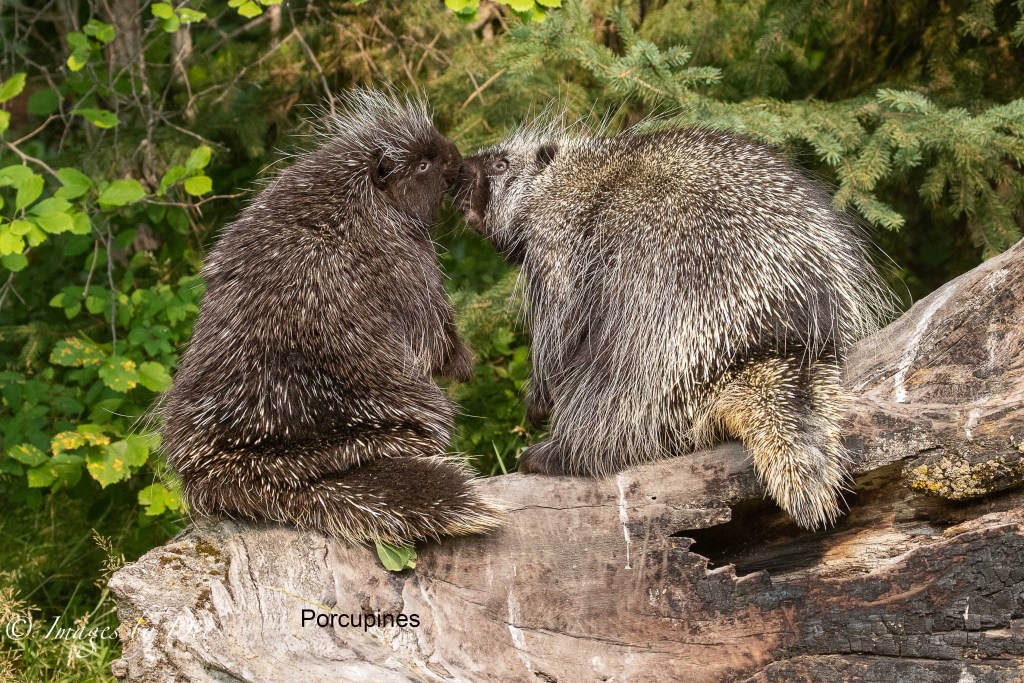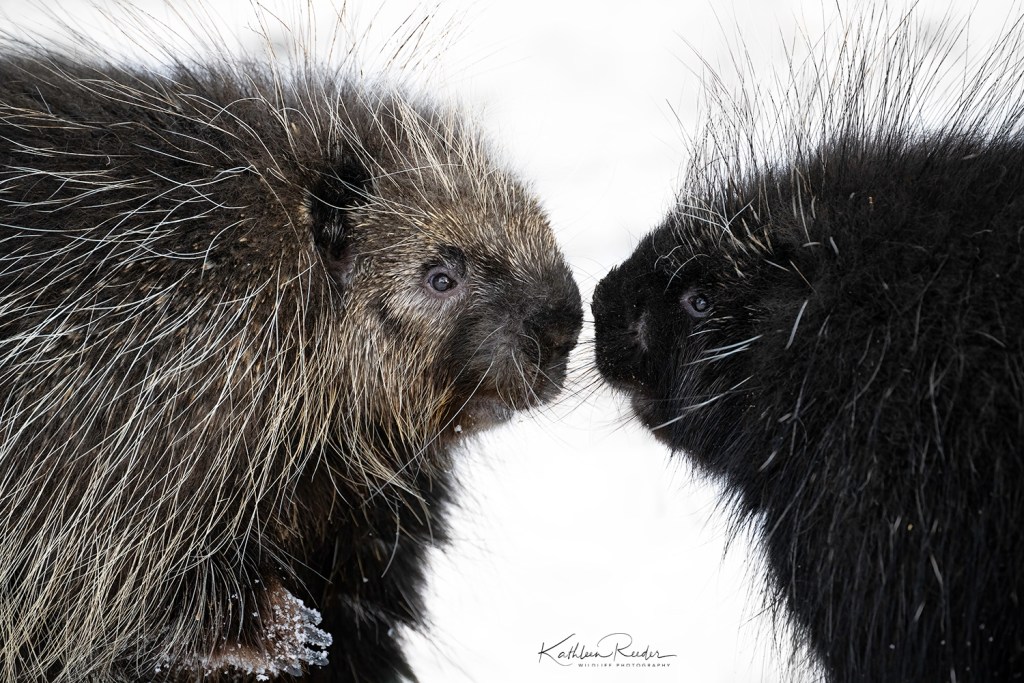
Porcupines are slow-moving, nocturnal rodents with a surprising charm and a striking appearance. At Triple D, photographers have the opportunity to observe these unique animals up close, capturing their distinctive quills, expressive faces, and gentle behaviors. Their unusual look and calm demeanor make them a fascinating subject for wildlife photography.
Scientific Name
Erethizon dorsatum
Common Names
Porcupine
Description
Porcupines are medium-sized rodents, easily recognized by their sharp quills, round bodies, and small faces with expressive eyes. These quills act as a natural defense against predators, while their strong claws and teeth allow them to climb trees and feed on bark, leaves, and twigs. Porcupines are primarily solitary and nocturnal, but they are surprisingly curious and can be quite tolerant of human presence when approached carefully.
Filming Site
Our porcupine sessions take place in areas near the ranch with plenty of trees and natural brush, creating an environment that mirrors their natural habitat. Photographers can capture them climbing, foraging, or resting, with backdrops that highlight their quills and woodland setting. The natural light and varied terrain allow for a range of close-up and action shots.
When Should You Visit
Porcupines can be observed year-round, with activity often highest during the cooler parts of the day. Early morning and late afternoon sessions are ideal for capturing their natural behaviors, whether climbing trees, exploring the forest floor, or quietly observing their surroundings. Winter can highlight their thick, protective coat, while spring and summer bring more active foraging and climbing behaviors.
What To Expect
We apologize for the missing details and are diligently working to resolve this.
What You Should Know
We apologize for the missing details and are diligently working to resolve this.
What You Should Bring
We apologize for the missing details and are diligently working to resolve this.
What You Should Do
Bring everything you need, including memory cards and batteries, to the photo session. You cannot leave the shooting compound once filming begins.
We’ve all done it one time or another, we’ve all been guilty of chimping. Minimize chimping during the photo session as it decreases battery life and increases the likelihood of missing a great shot.
Do not touch the animal, the operating permits prohibit public contact with the Triple D animals.
Staying together as a group helps the trainer guide the animal to look in your direction. Consider moving within the group to capture photos from a different perspective and allow others to photograph from your position.
Do not call out to the animal or make any noises in order to get its attention. A successful session is only possible when the animal is focused on the trainer.
Silence your phone and do not answer or make phone calls.
Participant covenants and agrees that it will not photograph nor distribute, publish or make public in any manner photographs of:
(1) Any of Providers facilities, including, without limitation, cages, pens, or exercise areas;
(2) Any of the Subject Models when on a leash or in cages or pens;
(3) The Trainers or any of Provider’s employees, either with or without the Subject Models without Providers prior written authorization.