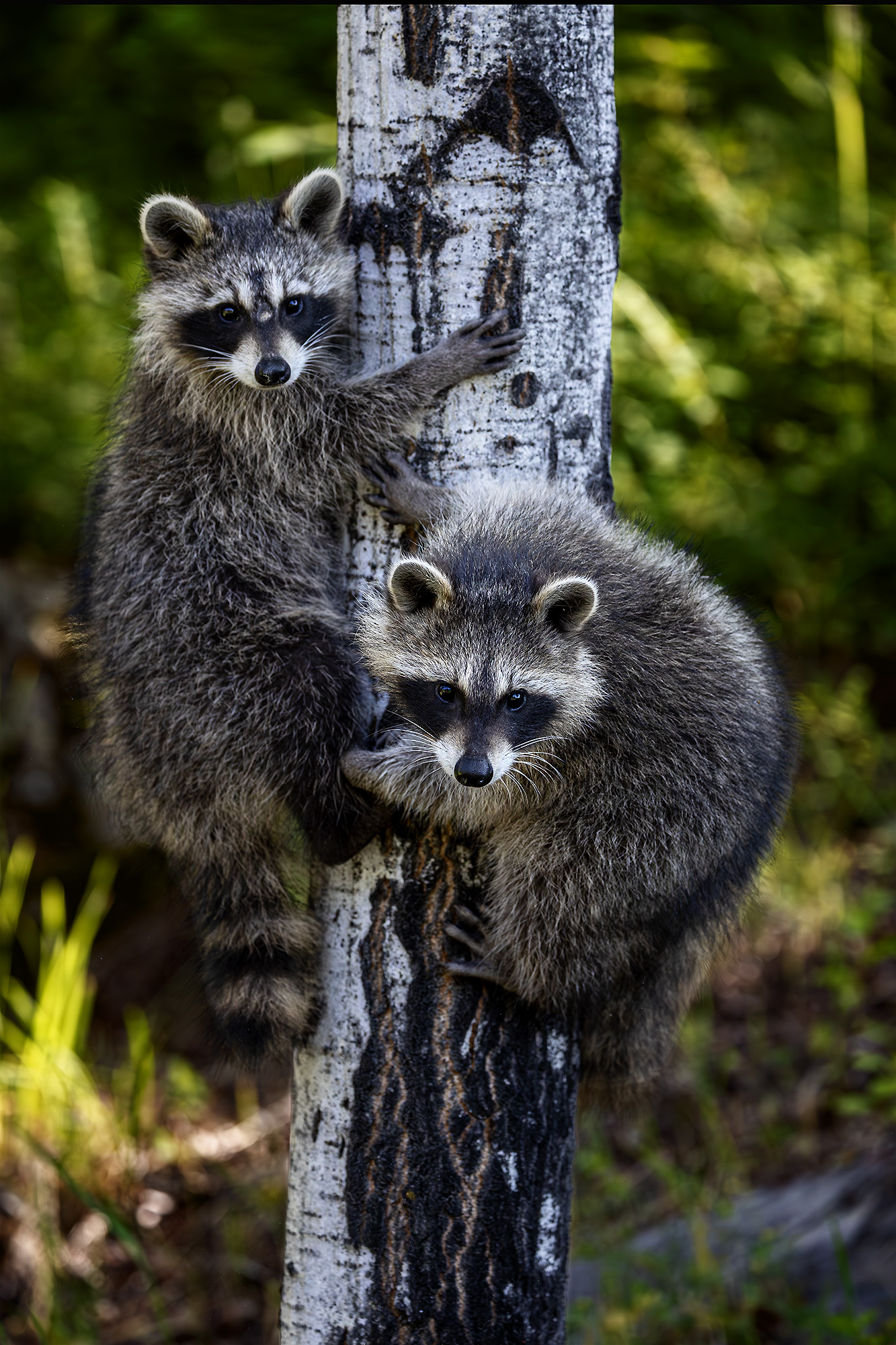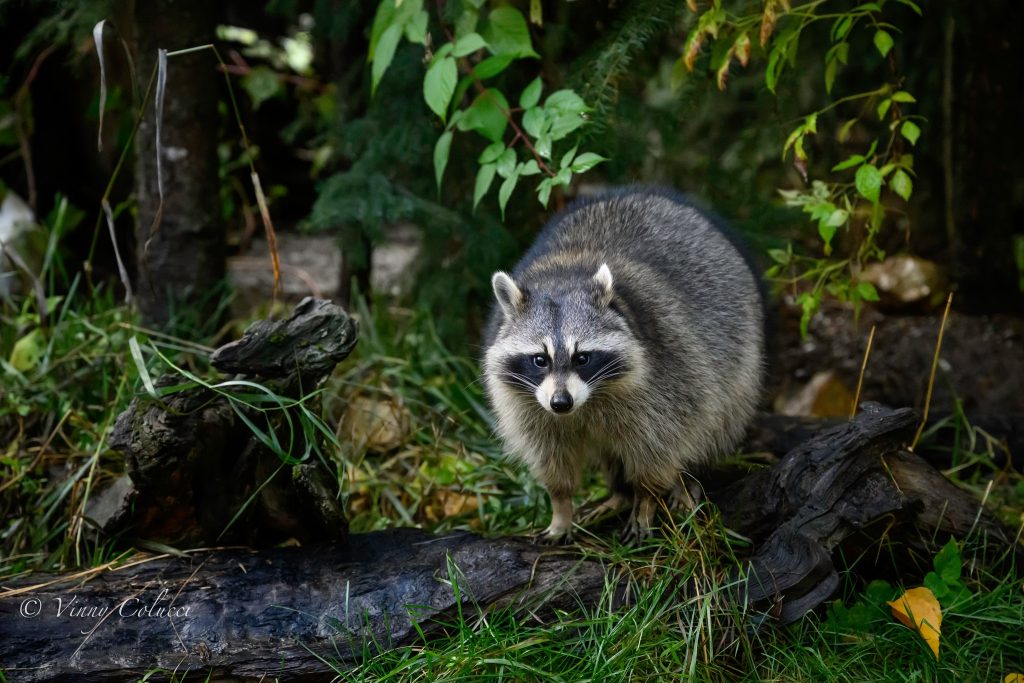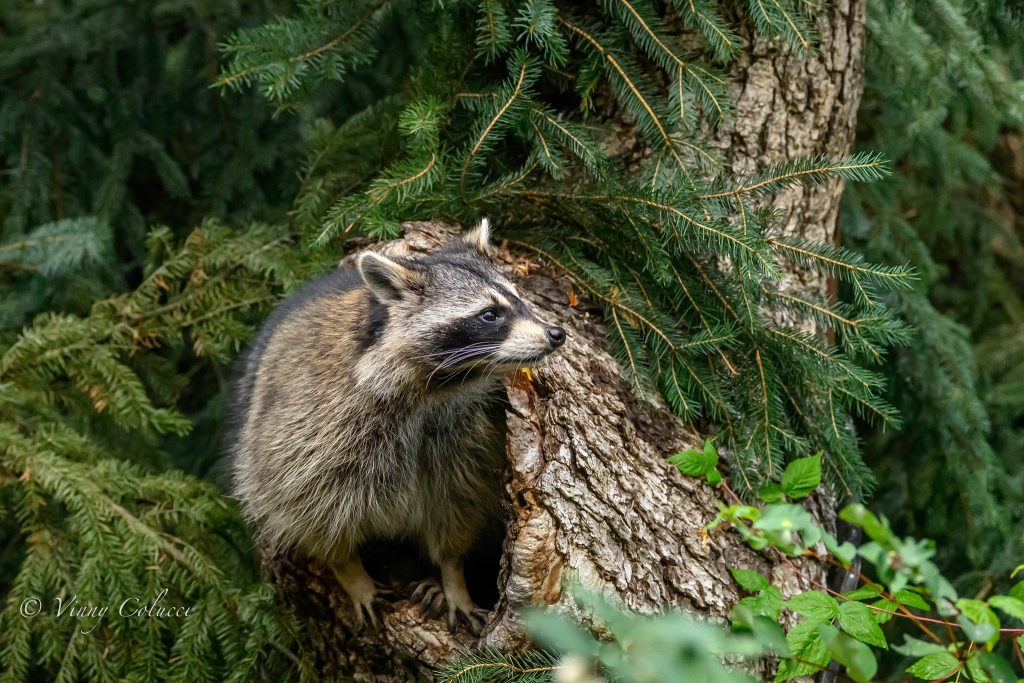
Curious, clever, and full of character, raccoons are a delight to photograph. At Triple D, photographers are offered the chance to capture these resourceful animals in a natural setting that highlights their inquisitive nature. From playful exploration to striking portraits, raccoon sessions provide fun, memorable, and often surprisingly expressive images.
Scientific Name
Procyon Lotor
Common Names
Raccoon
Description
Raccoons are medium-sized mammals, easily recognized by their black “mask” of fur across the eyes and their ringed tail. Highly adaptable, they thrive in forests, wetlands, and even urban areas, where their intelligence and dexterous paws allow them to investigate, climb, and manipulate objects with ease. Their curious behavior, combined with a wide range of facial expressions, makes them one of the most engaging small mammals to observe. Despite their playful appearance, raccoons are skilled survivors, capable of thriving in nearly any environment they encounter.
Filming Site
Our raccoon sessions take place in a natural area either at or near the ranch that features brush, trees, and climbing structures ideal for showcasing their agility. The setting provides opportunities to capture them foraging, climbing, or simply pausing to give one of their signature inquisitive looks. Natural light and varied backdrops allow for a diverse portfolio of images, from action shots to close-up portraits.
When Should You Visit
Raccoons are active throughout the year, so sessions are available in all seasons. They are most lively during the cooler parts of the day, especially in the early morning or late afternoon when the lighting is soft and flattering. These times bring out their playful and inquisitive side, making for lively photographic sessions. Seasonal changes can also influence their behavior — spring and summer often highlight youthful energy and exploration, while autumn provides rich colors that beautifully complement their coats.
What To Expect
We apologize for the missing details and are diligently working to resolve this.
What You Should Know
We apologize for the missing details and are diligently working to resolve this.
What You Should Bring
We apologize for the missing details and are diligently working to resolve this.
What You Should Do
Bring everything you need, including memory cards and batteries, to the photo session. You cannot leave the shooting compound once filming begins.
We’ve all done it one time or another, we’ve all been guilty of chimping. Minimize chimping during the photo session as it decreases battery life and increases the likelihood of missing a great shot.
Do not touch the animal, the operating permits prohibit public contact with the Triple D animals.
Staying together as a group helps the trainer guide the animal to look in your direction. Consider moving within the group to capture photos from a different perspective and allow others to photograph from your position.
Do not call out to the animal or make any noises in order to get its attention. A successful session is only possible when the animal is focused on the trainer.
Silence your phone and do not answer or make phone calls.
Participant covenants and agrees that it will not photograph nor distribute, publish or make public in any manner photographs of:
(1) Any of Providers facilities, including, without limitation, cages, pens, or exercise areas;
(2) Any of the Subject Models when on a leash or in cages or pens;
(3) The Trainers or any of Provider’s employees, either with or without the Subject Models without Providers prior written authorization.