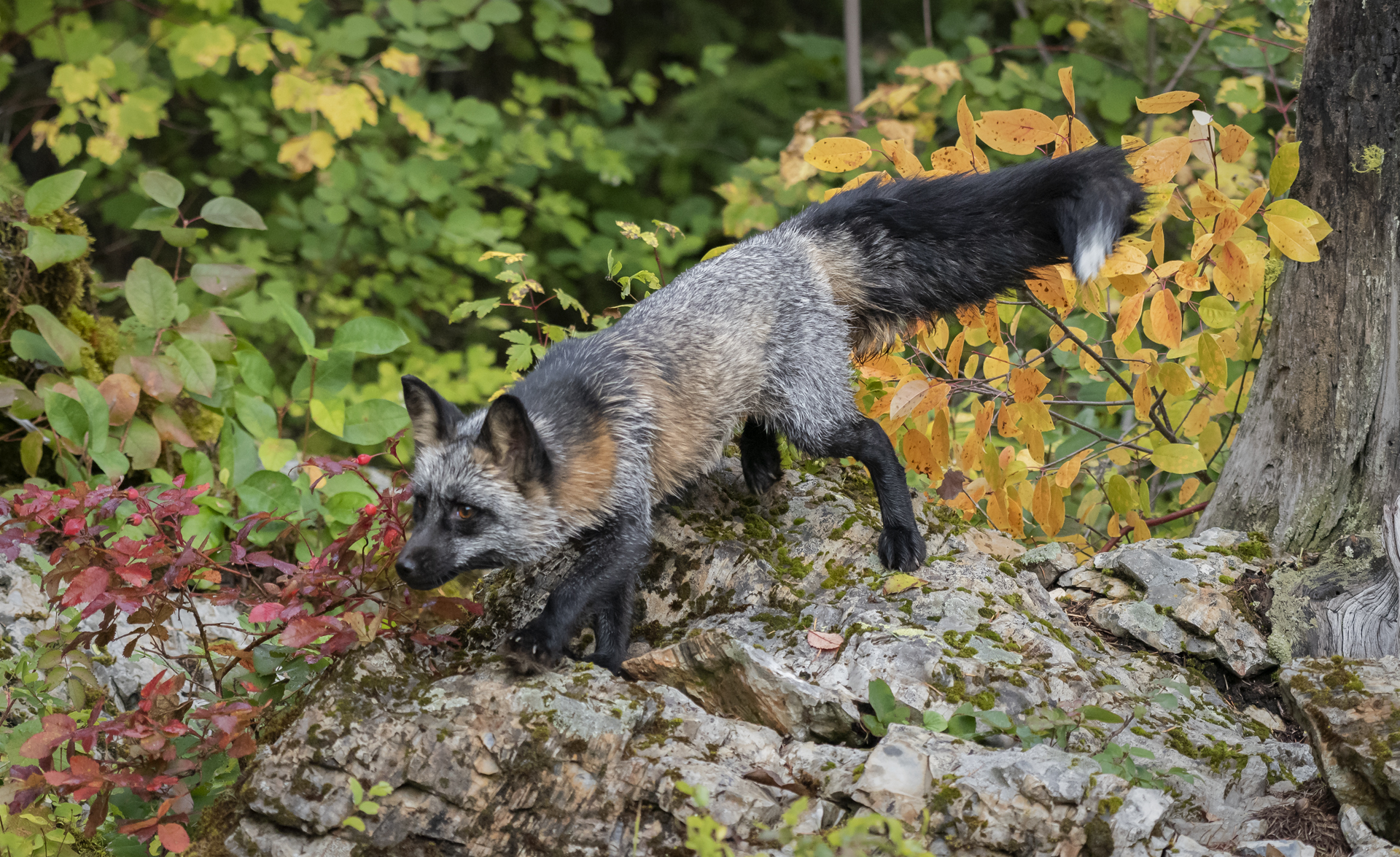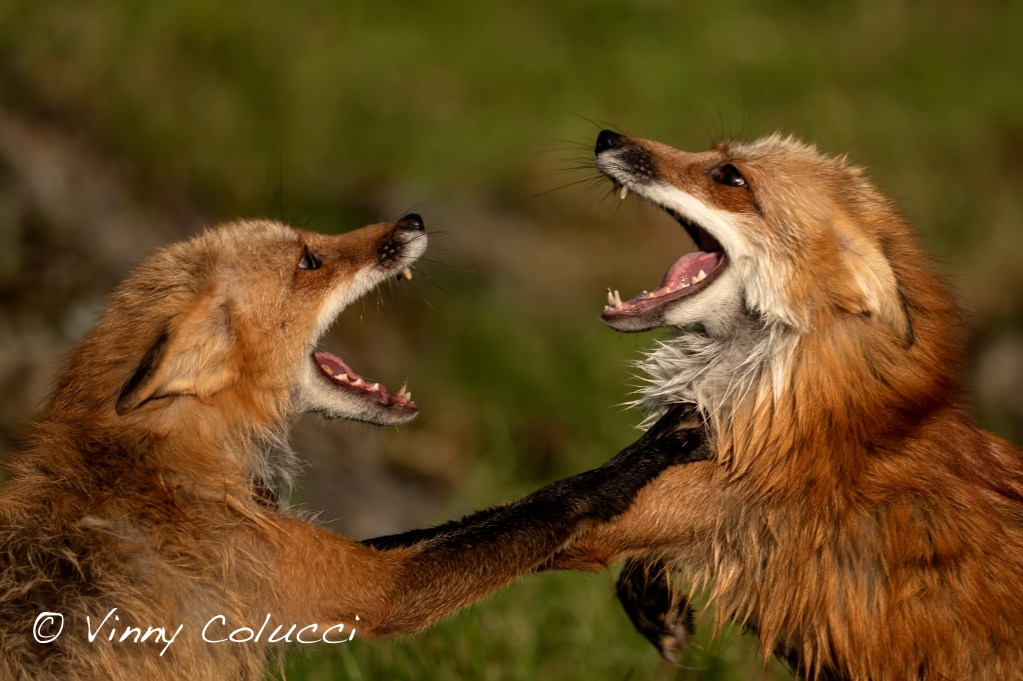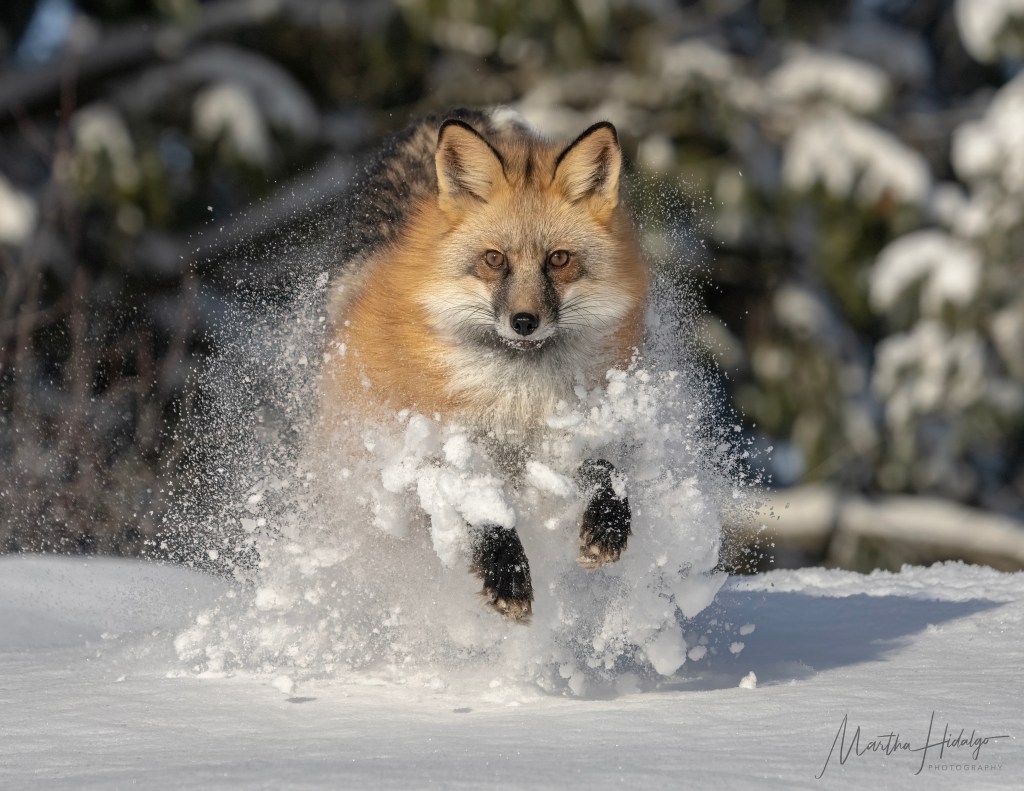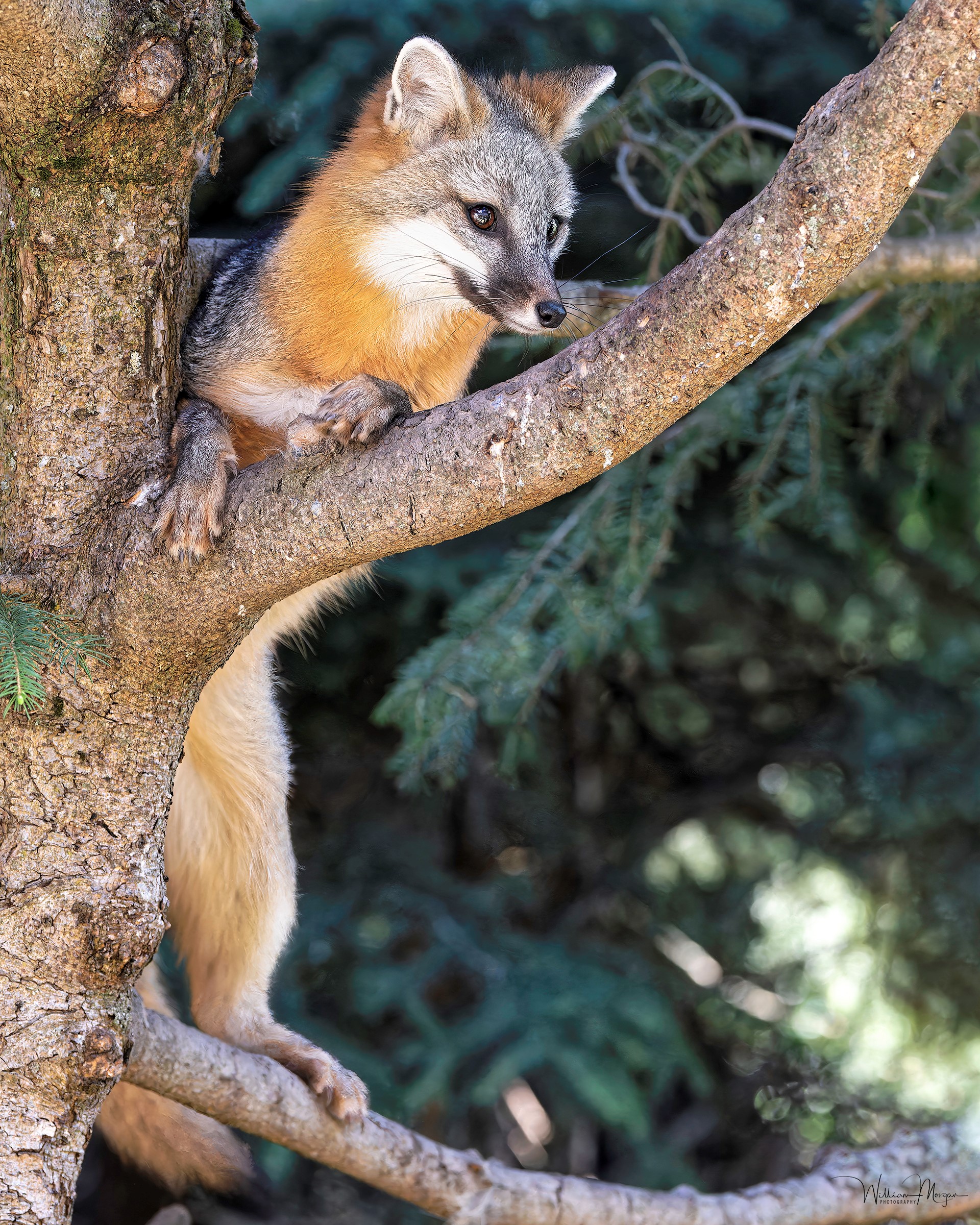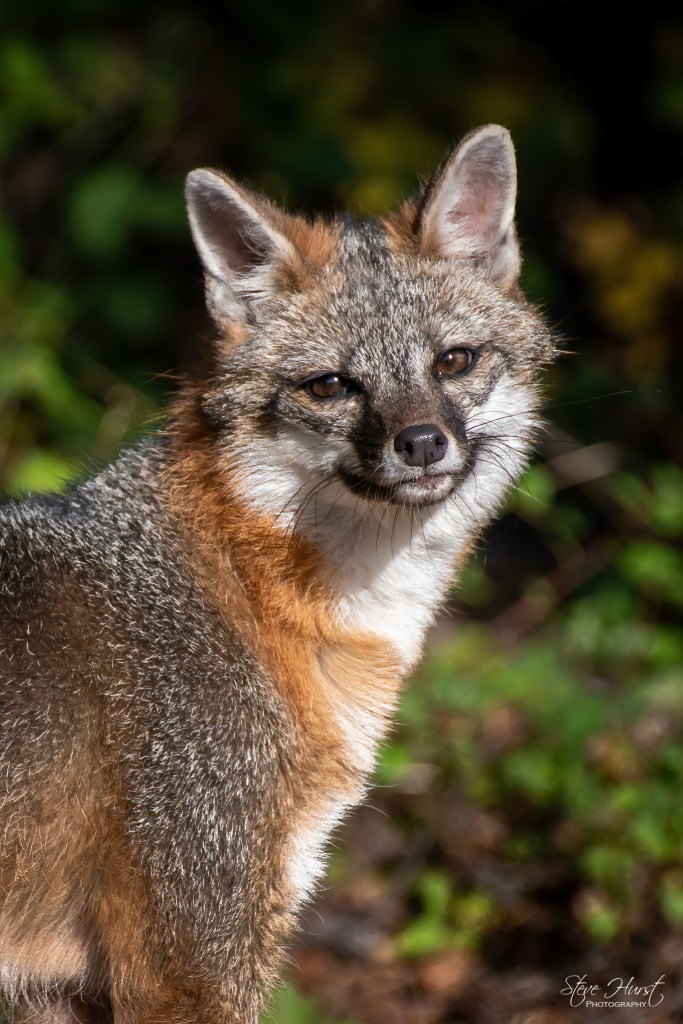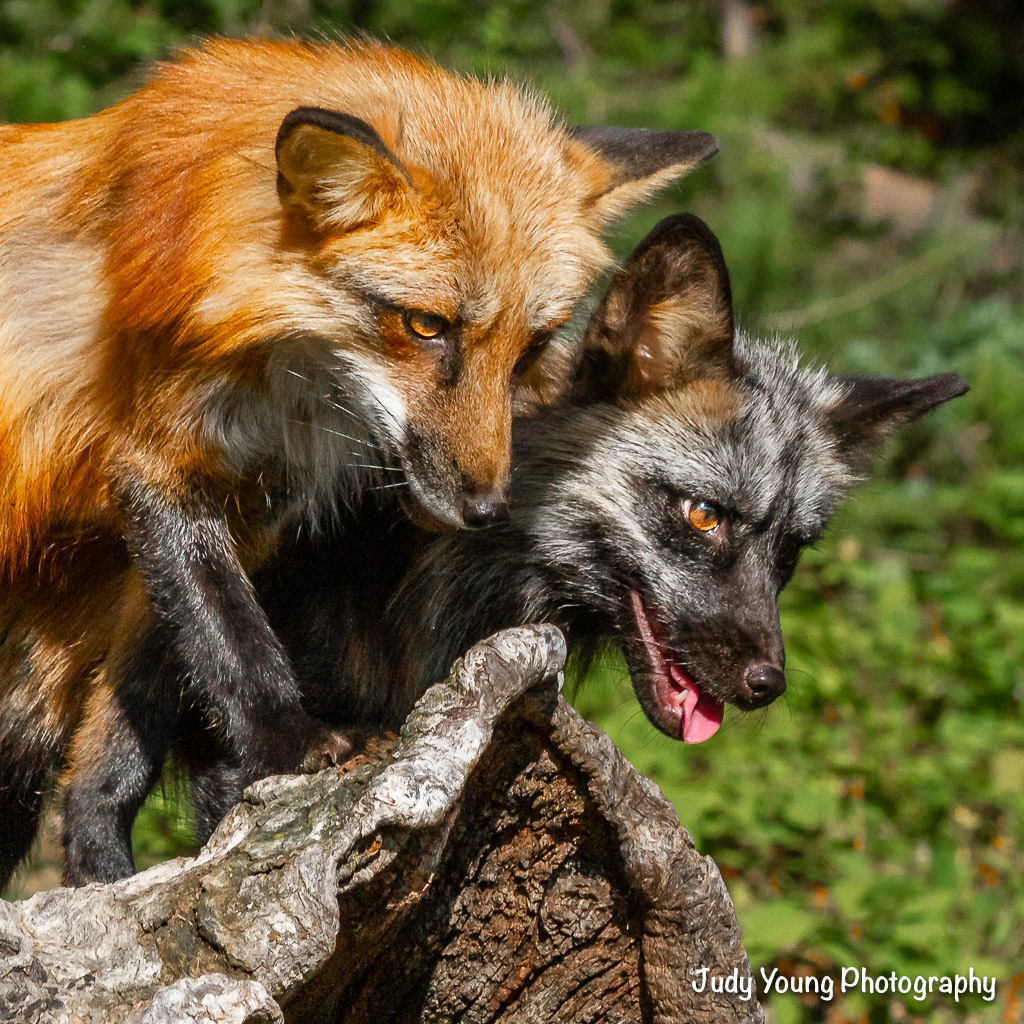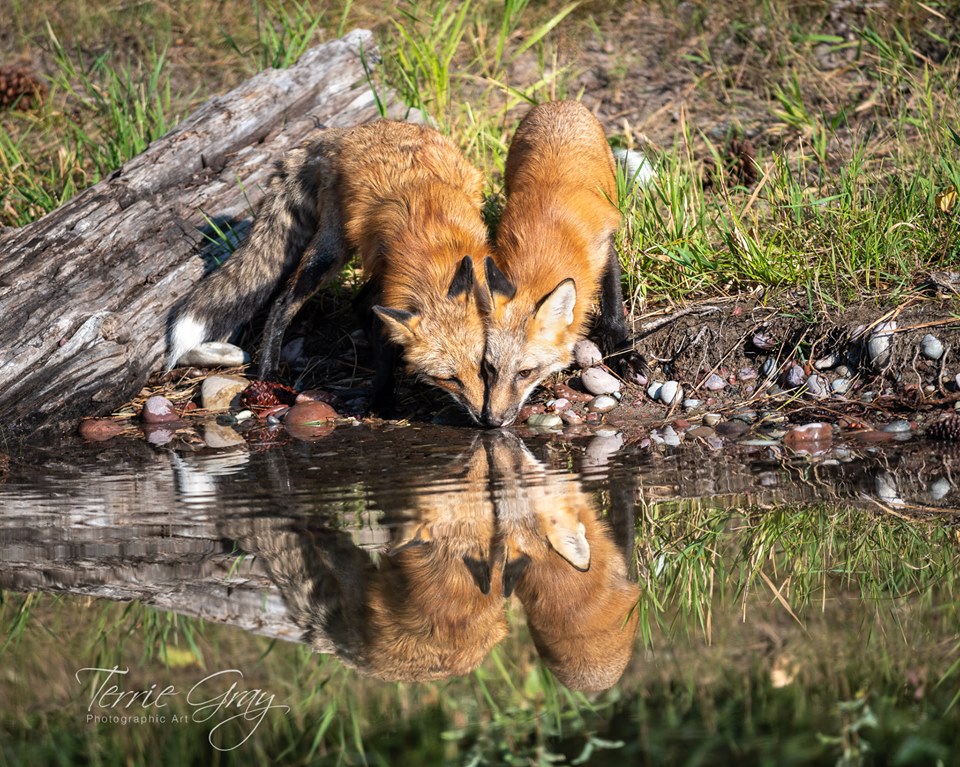
At Triple D Wildlife, you’ll encounter an incredible variety of fox species, each with its own unique beauty and personality. From the snow-white Arctic fox, perfectly adapted to the cold northern climates, to the sleek and elusive Gray fox, our collection showcases nature’s diversity. The classic Red fox adds a splash of fiery color, while the shimmering Silver fox offers a rare and striking variation. Rarest of all, the Cross fox blends rich hues of red, black, and gold into a breathtaking pattern.
Whether you’re observing their playful behavior or capturing them through your lens, these fox are a true highlight of the wildlife experience.
Red Fox
Scientific Name
Vulpes vulpes
Color Variations
Cross Fox & Silver Fox
Description
Red foxes are medium-sized wild canines, typically weighing between 8 to 15 pounds. They have a reddish-brown elongated body, with a white underbelly and black ears and legs. Their tail is thick and bushy and is usually white-tipped. Their face has a pointed snout, sharp teeth, and a white “bib” on the throat. They have long, slim legs, and large, pointed ears. Their eyes are dark and expressive, and their pupils are vertical, similar to a cat’s.
In North America, red foxes can be found from the Arctic tundra to the subtropical regions of the southern United States. Red foxes are known to be able to survive in a wide range of environments and can be found in areas such as:
- Forest and woodlands, including deciduous, coniferous and mixed forests.
- Grasslands, including prairies, meadows, and pastures.
- Deserts, including hot and cold deserts
- Wetlands, including marshes, swamps, and even mangroves.
- Urban areas, including parks, gardens, and even cemeteries.
Red foxes usually breed between December and February, and the kits are born between March and April. The mother fox will make a den to give birth and raise her kits, she will often use the same den year after year. The den is typically located in a secluded area, such as a dense thicket, a rock pile, a hollow log, or an underground burrow.
The kits will stay in the den for several weeks, they will start to venture out of the den at around 6-8 weeks old, and will start to eat solid food at around 8-10 weeks old.
Filming Site
There are several filming sites available, each offering a different experience. The season and activity determine if a filming site with a pond, rocky terrain or a forest setting is used. All sites include trees, brush, open areas, and logs.
When Should You Visit
Red Fox are active all year. Late spring/early summer baby sessions may feature Red Fox kits. Red Foxes are very photogenic amongst the autumn colors. Winter provides an opportunity to capture images on snow and summer near water. For a more intimate experience plan on attending April or November when there may be fewer photographers.
What To Expect
Two types of sessions are offered, an individual or multiple foxes. An individual fox will focus on the trainer, providing many poses for the photographers. An interactive session consists of two or more foxes. The foxes are focused on each other and do not pose. During an interactive session the foxes may react to one another through vocalizations, snarling, and wrestling.
An individual Red Fox begins the session with a lot of energy, exploring the filming location. Shutter speed is a priority to capture the action. The trainer will work the Red Fox around the site, taking advantage of the natural features including trees and logs.
As the session progresses the Red Fox will slowly burn off its excited energy. Towards the end of the session the Red Fox may pose in front of the photographers.
Standing, kneeling, and sitting are permitted. Many photographers prefer to be lower when the fox is close, achieving an eye level image while standing when the fox is moving quickly or further away.
What You Should Know
Basic skills with your camera to:
- Set exposures for various conditions ranging from bright sunlight to shade;
- Use higher shutter speeds and continuous auto focus to photographic action.
If you use a polarizer you should be able to adjust the filter for the desired effect.
If you use a tripod you should be able to quickly change the height, especially important when transitioning between standing and kneeling or sitting.
What You Should Bring
Red Fox movement may be quick or in a shady spot, therefore a larger aperture is more beneficial than focal length. The distance to the Red Fox will vary, at times being quite close, thus a zoom lens is more versatile than a large prime lens. A 70-200 f2.8 works well in all situations. A 100-400 (or 80-400) will bring the Red Fox closer, allowing for some intimate portraits.
Extra batteries and memory cards as there is nothing worse than running out. Unlike searching for wildlife, a Triple D Red Fox model is present throughout the entire filming session and many photographers take more photos in several minutes than they would in an entire day.
A second camera:
- Provides a backup should an equipment failure occur;
- Allows you to continue the session when a battery is depleted or a memory card is full;
- Allows you to continue when your buffer is full;
- Can be equipped with different lenses (wide angle to telephoto) to capture a range of compositions;
- Can be set with a different exposure to easily transition between darker exposures and high-speed action.
First time attendees are often surprised by the large number of photographs they capture. Secondary storage devices are recommended.
A circular polarizing filter may enhance water reflections.
If you prefer using a tripod or monopod than a quick release system is recommended as you may want to handhold your camera in order to quickly reposition yourself.
The west side of the Rocky Mountains can experience precipitation year-round, ranging from rain to sleet to wet snow. Rain protection for your equipment will reduce your anxiety in these situations.
Kneepads can be comforting when you choose to kneel for extended periods. Inexpensive kneepads are available at gardening supply stores. A small portable stool or cushion may be used while sitting.
What You Should Do
Bring everything you need, including memory cards and batteries, to the photo session. You cannot leave the shooting compound once filming begins.
We’ve all done it one time or another, we’ve all been guilty of chimping. Minimize chimping during the photo session as it decreases battery life and increases the likelihood of missing a great shot.
Staying together as a group helps the trainer guide the Red Fox to look in your direction. Consider moving within the group to capture photos from a different perspective and allow others to photograph from your position.
Do not call out to the Red Fox or make any noises in order to get its attention. A successful session is only possible when the fox is focused on the trainer.
Silence your phone and do not answer or make phone calls.
Participant covenants and agrees that it will not photograph nor distribute, publish or make public in any manner photographs of:
(1) Any of Providers facilities, including, without limitation, cages, pens, or exercise areas;
(2) Any of the Subject Models when on a leash or in cages or pens;
(3) The Trainers or any of Provider’s employees, either with or without the Subject Models without Providers prior written authorization.
Silver Fox
Scientific Name
Vulpes vulpes
Color Variations
Cross Fox & Red Fox
Description
A silver fox is a color variant of the red fox, characterized by its silver-black or black-tipped fur, giving them a frosted or “silver” appearance. The fur on their back and sides is typically a dark red or black color, with white or silver tips. The eyes and pupils are dark, similar to the red fox.
Silver foxes are relatively rare and are not found in all populations of red foxes, but they are known to occur in North America and Europe. They are considered a highly prized furbearer, and their fur is used to make clothing and other items.
Silver foxes are known to be able to survive in a wide range of environments and can be found in areas such as:
- Forest and woodlands, including deciduous, coniferous and mixed forests.
- Grasslands, including prairies, meadows, and pastures.
- Deserts, including hot and cold deserts
- Wetlands, including marshes, swamps, and even mangroves.
- Urban areas, including parks, gardens, and even cemeteries.old.
Filming Site
There are several filming sites available, each offering a different experience. The season and activity determine if a filming site with a pond, rocky terrain or a forest setting is used. All sites include trees, brush, open areas, and logs.
When Should You Visit
Silver Fox are active all year. Late spring/early summer baby sessions may feature Silver Fox kits. Silver Foxes are very photogenic amongst the autumn colors. Winter provides an opportunity to capture images on snow and summer near water. For a more intimate experience plan on attending April or November when there may be fewer photographers.
What To Expect
The Silver Fox begins the session with a lot of energy, exploring the filming location. Shutter speed is a priority to capture the action. The trainer will work the Silver Fox around the site, taking advantage of the natural features including trees and logs.
As the session progresses the Silver Fox will slowly burn off its excited energy. Towards the end of the session the Silver Fox may pose in front of the photographers.
Standing, kneeling, and sitting are permitted. Many photographers prefer to be lower when the fox is close, achieving an eye level image while standing when the fox is moving quickly or further away.
What You Should Know
Basic skills with your camera to:
- Set exposures for various conditions ranging from bright sunlight to shade;
- Use higher shutter speeds and continuous auto focus to photographic action.
If you use a polarizer you should be able to adjust the filter for the desired effect.If you use a tripod you should be able to quickly change the height, especially important when transitioning between standing and kneeling or sitting.
What You Should Bring
Silver Fox movement may be quick or in a shady spot, therefore a larger aperture is more beneficial than focal length. The distance to the Silver Fox will vary, at times being quite close, thus a zoom lens is more versatile than a large prime lens. A 70-200 f2.8 works well in all situations. A 100-400 (or 80-400) will bring the Silver Fox closer, allowing for some intimate portraits.Extra batteries and memory cards as there is nothing worse than running out. Unlike searching for wildlife, a Triple D Silver Fox model is present throughout the entire filming session and many photographers take more photos in several minutes than they would in an entire day.
A second camera:
- Provides a backup should an equipment failure occur;
- Allows you to continue the session when a battery is depleted or a memory card is full;
- Allows you to continue when your buffer is full;
- Can be equipped with different lenses (wide angle to telephoto) to capture a range of compositions;
- Can be set with a different exposure to easily transition between darker exposures and high-speed action.
First time attendees are often surprised by the large number of photographs they capture. Secondary storage devices are recommended.
A circular polarizing filter may enhance water reflections.
If you prefer using a tripod or monopod than a quick release system is recommended as you may want to handhold your camera in order to quickly reposition yourself.
The west side of the Rocky Mountains can experience precipitation year-round, ranging from rain to sleet to wet snow. Rain protection for your equipment will reduce your anxiety in these situations.
Kneepads can be comforting when you choose to kneel for extended periods. Inexpensive kneepads are available at gardening supply stores. A small portable stool or cushion may be used while sitting.
What You Should Do
Bring everything you need, including memory cards and batteries, to the photo session. You cannot leave the shooting compound once filming begins.
We’ve all done it one time or another, we’ve all been guilty of chimping. Minimize chimping during the photo session as it decreases battery life and increases the likelihood of missing a great shot.
Staying together as a group helps the trainer guide the Silver Fox to look in your direction. Consider moving within the group to capture photos from a different perspective and allow others to photograph from your position.
Do not call out to the Silver Fox or make any noises in order to get its attention. A successful session is only possible when the fox is focused on the trainer.
Silence your phone and do not answer or make phone calls.
Participant covenants and agrees that it will not photograph nor distribute, publish or make public in any manner photographs of:
(1) Any of Providers facilities, including, without limitation, cages, pens, or exercise areas;
(2) Any of the Subject Models when on a leash or in cages or pens;
(3) the Trainers or any of Provider’s employees, either with or without the Subject Models without Providers prior written authorization.
Cross Fox
Scientific Name
Vulpes vulpes
Color Variations
Red Fox & Silver Fox
Description
A cross fox is a color variant of the red fox, the fur on their back and sides is typically red or orange with a black “cross” running down the back and across the shoulders. The legs and belly are typically white, and the tail usually has a white tip. The fur on their head is usually red or orange, and their ears and face have the same black and white pattern as the rest of the body. The black coloration is usually more pronounced on the back of the animal and the white coloration on the legs and belly. The eyes and pupils are dark, similar to the red fox.
Cross foxes are relatively rare and are not found in all populations of red foxes, but they are known to occur in North and South America. Cross Foxes populations are less than Red Foxes but greater than Silver Foxes.
Cross foxes are known to be able to survive in a wide range of environments and can be found in areas such as:
- Forest and woodlands, including deciduous, coniferous and mixed forests.
- Grasslands, including prairies, meadows, and pastures.
- Deserts, including hot and cold deserts
- Wetlands, including marshes, swamps, and even mangroves.
- Urban areas, including parks, gardens, and even cemeteries.
Filming Site
There are several filming sites available, each offering a different experience. The season and activity determine if a filming site with a pond, rocky terrain or a forest setting is used. All sites include trees, brush, open areas, and logs.
When Should You Visit
Cross Fox are active all year. Late spring/early summer baby sessions may feature Cross Fox kits. Cross Foxes are very photogenic amongst the autumn colors. Winter provides an opportunity to capture images on snow and summer near water. For a more intimate experience plan on attending April or November when there may be fewer photographers.
What To Expect
The Cross Fox begins the session with a lot of energy, exploring the filming location. Shutter speed is a priority to capture the action. The trainer will work the Cross Fox around the site, taking advantage of the natural features including trees and logs.
As the session progresses the Cross Fox will slowly burn off its excited energy. Towards the end of the session the Cross Fox may pose in front of the photographers.
Standing, kneeling, and sitting are permitted. Many photographers prefer to be lower when the fox is close, achieving an eye level image while standing when the fox is moving quickly or further away.
What You Should Know
Basic skills with your camera to:
- Set exposures for various conditions ranging from bright sunlight to shade;
- Use higher shutter speeds and continuous auto focus to photographic action.
If you use a polarizer you should be able to adjust the filter for the desired effect.
If you use a tripod you should be able to quickly change the height, especially important when transitioning between standing and kneeling or sitting.
What You Should Bring
Cross Fox movement may be quick or in a shady spot, therefore a larger aperture is more beneficial than focal length. The distance to the Cross Fox will vary, at times being quite close, thus a zoom lens is more versatile than a large prime lens. A 70-200 f2.8 works well in all situations. A 100-400 (or 80-400) will bring the Cross Fox closer, allowing for some intimate portraits.
Extra batteries and memory cards as there is nothing worse than running out. Unlike searching for wildlife, a Triple D Cross Fox model is present throughout the entire filming session and many photographers take more photos in several minutes than they would in an entire day.
A second camera:
- Provides a backup should an equipment failure occur;
- Allows you to continue the session when a battery is depleted or a memory card is full;
- Allows you to continue when your buffer is full;
- Can be equipped with different lenses (wide angle to telephoto) to capture a range of compositions;
- Can be set with a different exposure to easily transition between darker exposures and high-speed action.
First time attendees are often surprised by the large number of photographs they capture. Secondary storage devices are recommended.
A circular polarizing filter may enhance water reflections.
If you prefer using a tripod or monopod than a quick release system is recommended as you may want to handhold your camera in order to quickly reposition yourself.
The west side of the Rocky Mountains can experience precipitation year-round, ranging from rain to sleet to wet snow. Rain protection for your equipment will reduce your anxiety in these situations.
Kneepads can be comforting when you choose to kneel for extended periods. Inexpensive kneepads are available at gardening supply stores. A small portable stool or cushion may be used while sitting.
What You Should Do
Bring everything you need, including memory cards and batteries, to the photo session. You cannot leave the shooting compound once filming begins.
We’ve all done it one time or another, we’ve all been guilty of chimping. Minimize chimping during the photo session as it decreases battery life and increases the likelihood of missing a great shot.
Staying together as a group helps the trainer guide the Cross Fox to look in your direction. Consider moving within the group to capture photos from a different perspective and allow others to photograph from your position.
Do not call out to the Cross Fox or make any noises in order to get its attention. A successful session is only possible when the fox is focused on the trainer.
Silence your phone and do not answer or make phone calls.
Participant covenants and agrees that it will not photograph nor distribute, publish or make public in any manner photographs of:
(1) Any of Providers facilities, including, without limitation, cages, pens, or exercise areas;
(2) Any of the Subject Models when on a leash or in cages or pens;
(3) The Trainers or any of Provider’s employees, either with or without the Subject Models without Providers prior written authorization.
Gray Fox
Scientific Name
Urocyon cinereoargenteus
Common Names
Gray Fox, Grey Fox & Tree Fox
Description
The Gray Fox has a grizzled gray back, tan belly, and red patches on the neck, sides, and legs. A black stripe extends down the top of the tail to the tip. It has white on the ears, throat, and hind legs. The Gray Fox has oval instead of slit like pupils.
Filming Site
The filming site will be a natural setting for a Gray Fox. The site includes trees, brush, open areas, and logs. A hollow tree or burrow, typically used by a Gray Fox during the day for a den, may also be on site.
When Should You Visit
Gray Fox are active all year. Late spring/early summer baby sessions may feature Gray Fox kits. Gray Foxes are very photogenic in an autumn setting. Winter provides an opportunity to capture images on snow. For a more intimate experience plan on attending April or November when there may be fewer photographers.
What To Expect
The Gray Fox begins the session with a lot of energy, exploring the filming location. Shutter speed is a priority to capture the action.
The trainer will work the Gray Fox around the site, taking advantage of the natural features including water, trees and logs.
As the session progresses the Gray Fox will slowly burn off its excited energy. Towards the end of the session the Gray Fox may pose in front of the photographers, providing opportunities to capture it’s unique slit like pupils.
Standing, kneeling, and sitting are permitted. Many photographers prefer to be lower when the fox is close, achieving an eye level image while standing when the fox is moving quickly or further away.
What You Should Know
Basic skills with your camera to:
- Set exposures for various conditions ranging from bright sunlight to shade;
- Use higher shutter speeds and continuous auto focus to photographic action.
If you use a tripod or monopod you should know how to:
- Rotate between horizontal and vertical compositions.
- Quickly change the height,especially important when transitioning between standing and kneeling or sitting;
What You Should Bring
Gray Fox movement may be quick or in a shady spot, therefore a larger aperture is more beneficial than focal length. The distance to the Gray Fox will vary, at times being quite close, thus a zoom lens is more versatile than a large prime lens. A 70-200 f2.8 works well in all situations. A 100-400 (or 80-400) will bring the Gray Fox closer, allowing for some intimate portraits.
Extra batteries and memory cards as there is nothing worse than running out. Unlike searching for wildlife, a Triple D Red Fox model is present throughout the entire filming session and many photographers take more photos in several minutes than they would in an entire day.
A second camera:
- Provides a backup should an equipment failure occur;
- Allows you to continue the session when a battery is depleted or a memory card is full;
- Allows you to continue when your buffer is full;
- Can be equipped with different lenses (wide angle to telephoto) to capture a range of compositions;
- Can be set with a different exposure to easily transition between darker exposures and high-speed action.
First time attendees are often surprised by the large number of photographs they capture. Secondary storage devices are recommended.
If you prefer using a tripod or monopod than a quick release system is recommended as you may want to handhold your camera in order to quickly reposition yourself.
The west side of the Rocky Mountains can experience precipitation year-round, ranging from rain to sleet to wet snow. Rain protection for your equipment will reduce your anxiety in these situations.
Kneepads can be comforting when you choose to kneel for extended periods. Inexpensive kneepads are available at gardening supply stores. A small portable stool or cushion may be used while sitting.
What You Should Do
Bring everything you need, including memory cards and batteries, to the photo session. You cannot leave the shooting compound once filming begins.
We’ve all done it one time or another, we’ve all been guilty of chimping. Minimize chimping during the photo session as it decreases battery life and increases the likelihood of missing a great shot.
Staying together as a group helps the trainer guide the Gray Fox to look in your direction. Consider moving within the group to capture photos from a different perspective and allow others to photograph from your position.
Do not call out to the Gray Fox or make any noises in order to get its attention. A successful session is only possible when the fox is focused on the trainer.
Silence your phone and do not answer or make phone calls.
Participant covenants and agrees that it will not photograph nor distribute, publish or make public in any manner photographs of:
(1) Any of Providers facilities, including, without limitation, cages, pens, or exercise areas;
(2) Any of the Subject Models when on a leash or in cages or pens;
(3) The Trainers or any of Provider’s employees, either with or without the Subject Models without Providers prior written authorization.
Arctic Fox
Scientific Name
Vulpes lagopuss
Common Names
Arctic Fox, Polar Fox, Snow Fox & White Fox
Description
Arctic foxes are small wild canines, typically weighing between 4 to 9 pounds. They have a thick, soft fur that changes color depending on the season. They occur in two color morphs that change seasonally. The more common white morph is white in the winter changing to a brownish-gray in the summer. The less common blue morph is blue-gray in the winter changing to a gray-brown in the summer. If you have a preference contact Triple D to determine the available color.
Their short ears and short, round snout give them a distinctive “cute” appearance. They have a bushy tail that is also thickly furred, and small, sharp claws that help them move on the ice and snow. Their eyes are dark and expressive, and their ears are small and rounded. They have a thick, warm undercoat that provides insulation against the cold and wind and a dense guard hair that protect them from the snow. Overall, Arctic foxes are well adapted for survival in the harsh Arctic environment with their thick fur, small size and efficient energy usage, allowing them to survive in extremely low temperatures.
Arctic foxes are found in the Arctic tundra and subarctic regions of the Northern Hemisphere, including Alaska, Canada, Greenland, Russia, Norway, Sweden, and Finland. They are also found on several Arctic islands, such as Iceland and Svalbard. They are well adapted to the harsh Arctic environment, with thick fur that provides insulation against the cold and snow. They are found in a variety of Arctic habitats, including tundra, mountains, and coastal areas. They are able to survive in areas where the ground is permanently frozen (permafrost) and can be found in both lowlands and highlands. They can also be found in areas with coastal cliffs and rocky outcrops and in areas with mosses, lichens and small shrubs. They also can be found in areas with wetlands, such as marshes and bogs.
Filming Site
There are several filming sites available, each offering a different experience. A custom- built snow compound is used to simulate a treeless tundra setting. These images feature the foxes with a snow background. An alternate site with some brush, rocks, and ice simulates a taiga setting. Contact Triple D if you have a preference as the weather can be unpredictable with varying snowfall and temperatures.
When Should You Visit
Arctic Fox are only available during the winter months when there is sufficient snow accumulation on the ground. Snow fall varies therefore contact Triple D to determine the current conditions.
What To Expect
The snow compound features an interactive session with multiple foxes. The foxes are focused on each other and do not pose. During an interactive session the foxes may react to one another through vocalizations, snarling, and wrestling.
The taiga setting typically uses a single Arctic Fox. An individual fox will focus on the trainer, providing many poses for the photographers.
The Arctic Fox begins the session with a lot of energy, exploring the filming location. Shutter speed is a priority to capture the action. The trainer will encourage the Arctic Fox to move around the site, taking advantage of the natural features including trees and logs.
As the session progresses the Arctic Fox will slowly burn off its excited energy. Towards the end of the session the Arctic Fox may pose in front of the photographers.
Be ready in case the Arctic Fox displays some of its hunting and foraging behaviours:
- Using their excellent sense of smell to locate food in the snow and ice
- Hunting by stalking their prey and pouncing on it using their sharp claws and teeth
- Digging to get to their food source
Standing, kneeling, and sitting are permitted. Many photographers prefer to be lower when the fox is close, achieving an eye level image while standing when the fox is moving quickly or further away.
What You Should Know
Basic skills with your camera to:
- Set exposures for a light- colored subject on snow;
- Set exposures for various conditions ranging from bright sunlight to shade;
- Use higher shutter speeds and continuous auto focus to photographic action.
If you use a tripod, you should be able to quickly change the height, especially important when transitioning between standing and kneeling or sitting
What You Should Bring
Slower, smaller aperture lens can be used on the tundra setting with a white morph fox on snow. The taiga setting will have some shady areas therefore a faster, larger aperture lens is more beneficial.
The distance to the Arctic Fox will vary, at times being quite close, thus a zoom lens is more versatile than a large prime lens. A 70-200 works well in all situations. A 100-400 (or 80-400) will bring the Arctic Fox closer, allowing for some intimate portraits.
A wide-angle lens allows you to capture more of the surroundings. In the snow compound this creates an image highlighting the vastness of the tundra and taiga type settings.
Extra batteries and memory cards as there is nothing worse than running out. Unlike searching for wildlife, a Triple D Arctic Fox model is present throughout the entire filming session and many photographers take more photos in several minutes than they would in an entire day.
Whether you are a professional, advanced amateur or hobbyist, being comfortable and confident with your equipment is the key success. If you have recently acquired a camera, you should still bring your old camera as a backup. There is nothing worse than struggling to do something with a new camera that you easily accomplished with your old one.
Even if you’ve owned your equipment for years, bring the manual(s) in case there is a setting you rarely or have never used. Loading manuals on your smart device provides convenient access.
A second camera:
- Provides a backup should an equipment failure occur;
- Allows you to continue the session when a battery is depleted or a memory card is full;
- Allows you to continue when your buffer is full;
- Can be equipped with different lenses (wide angle to telephoto) to capture a range of compositions;
- Can be set with a different exposure to easily transition between darker exposures and high-speed action.
First time attendees are often surprised by the large number of photographs they capture. Secondary storage devices are recommended.
If you prefer using a tripod or monopod than a quick release system is recommended as you may want to handhold your camera in order to quickly reposition yourself.
The west side of the Rocky Mountains can experience precipitation year-round, ranging from rain to sleet to wet snow. Rain protection for yourequipment will reduce your anxiety in these situations.
Kneepads can be comforting when you choose to kneel for extended periods. Inexpensive kneepads are available at gardening supply stores. A small portable stool or cushion may be used while sitting.
What You Should Do
Bring everything you need, including memory cards and batteries, to the photo session. You cannot leave the shooting compound once filming begins.
We’ve all done it one time or another, we’ve all been guilty of chimping. Minimize chimping during the photo session as it decreases battery life and increases the likelihood of missing a great shot.
Do not touch the Arctic Fox, the operating permits prohibit public contact with the Triple D animals.
Staying together as a group helps the trainer guide the Arctic Fox to look in your direction. Consider moving within the group to capture photos from a different perspective and allow others to photograph from your position.
Do not call out to the Arctic Fox or make any noises in order to get its attention. A successful session is only possible when the fox is focused on the trainer.
Silence your phone and do not answer or make phone calls.
Participant covenants and agrees that it will not photograph nor distribute, publish or make public in any manner photographs of:
(1) Any of Providers facilities, including, without limitation, cages, pens, or exercise areas;
(2) Any of the Subject Models when on a leash or in cages or pens;
(3) The Trainers or any of Provider’s employees, either with or without the Subject Models without Providers prior written authorization.