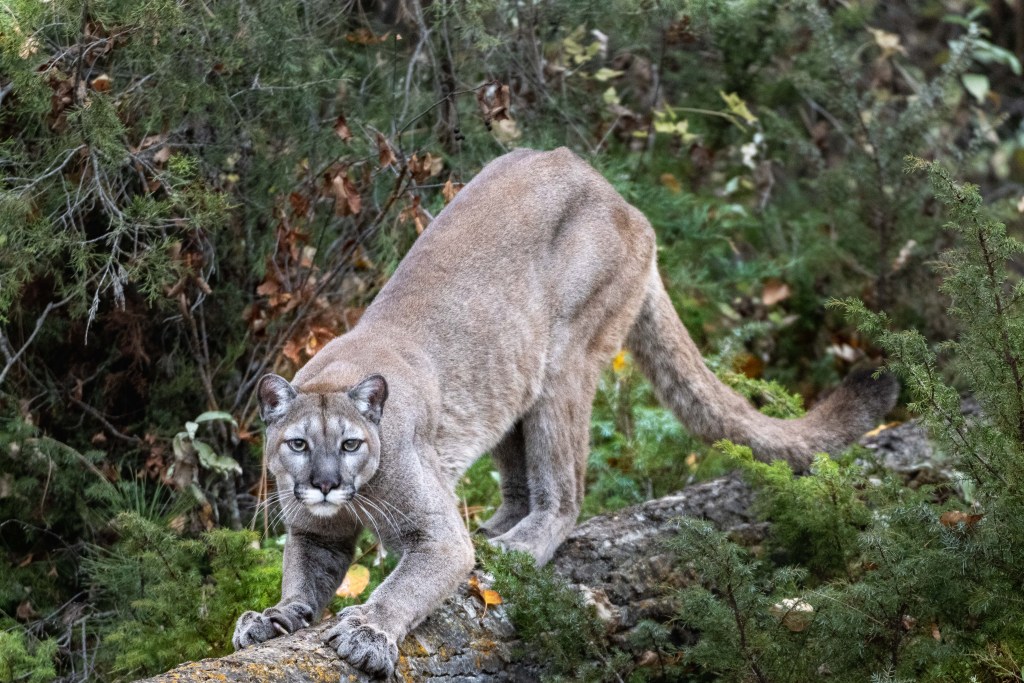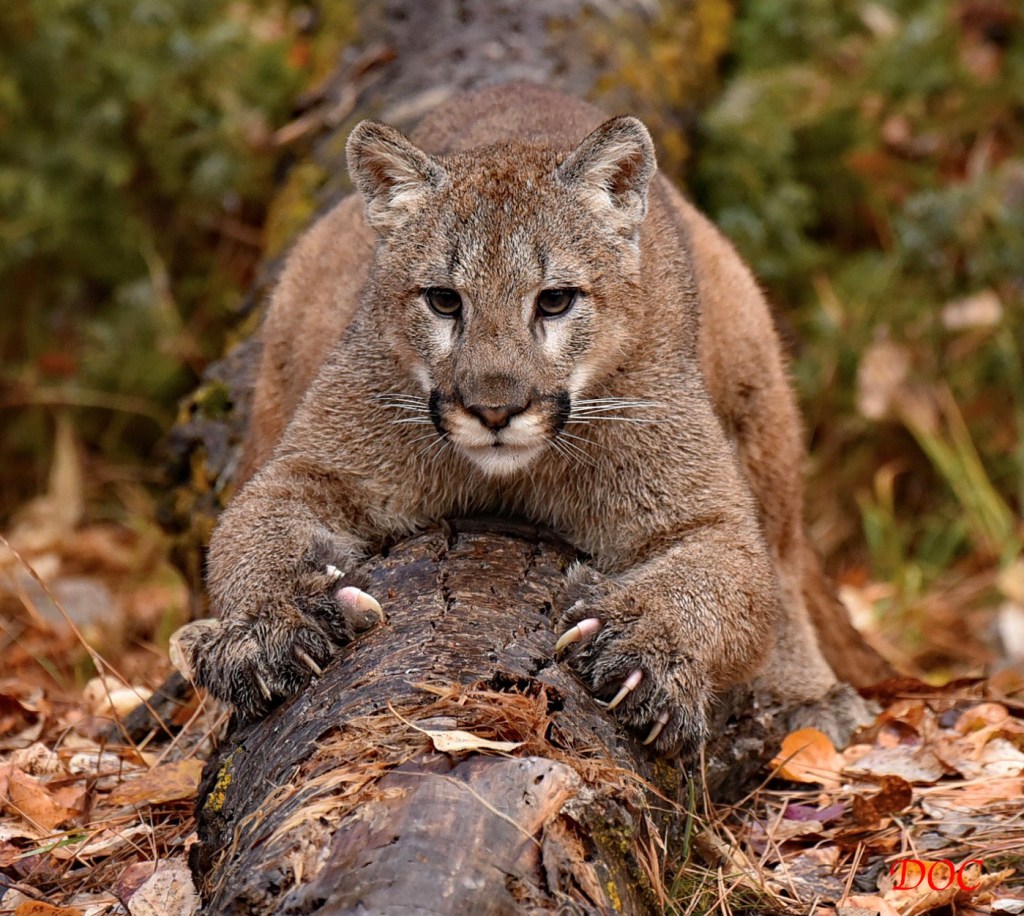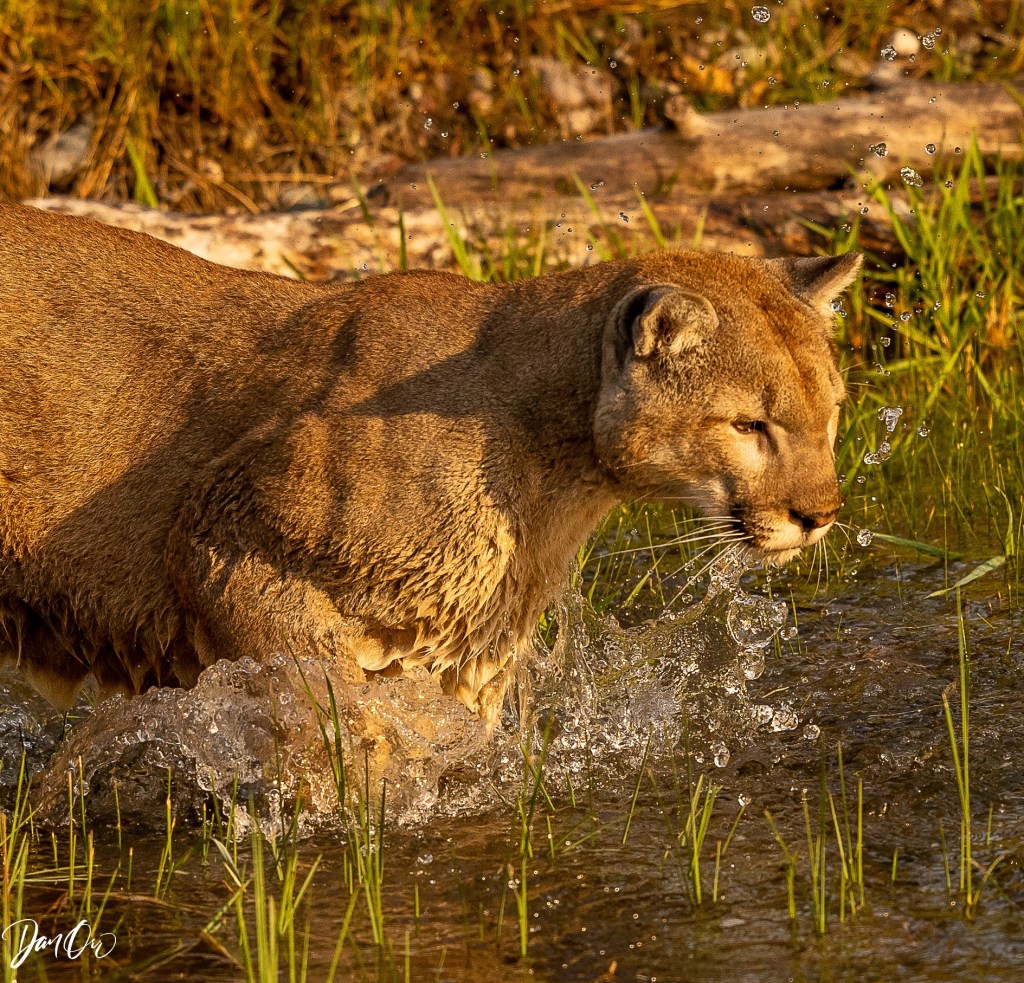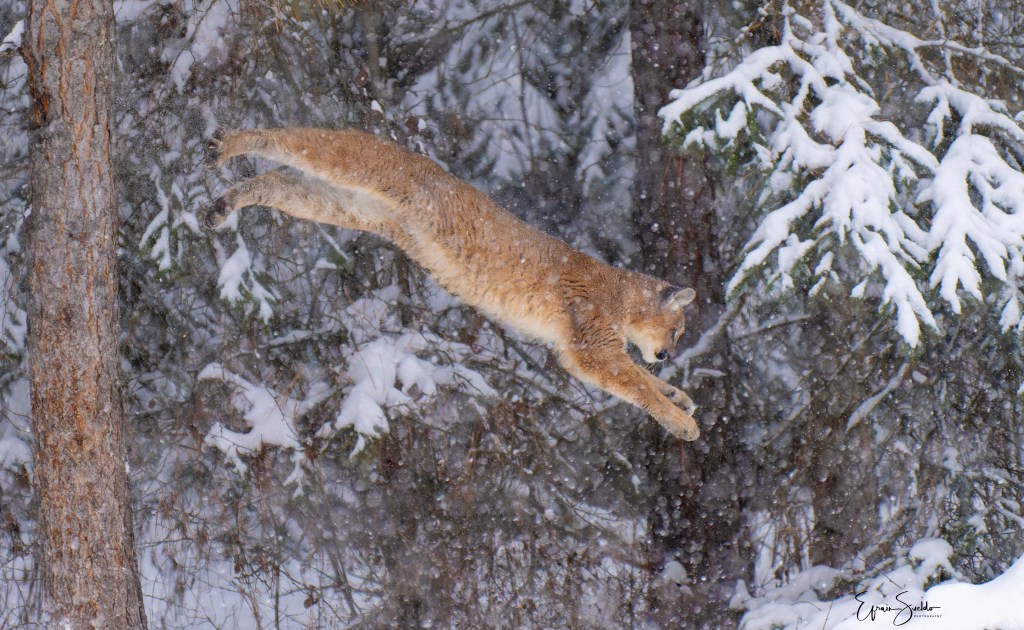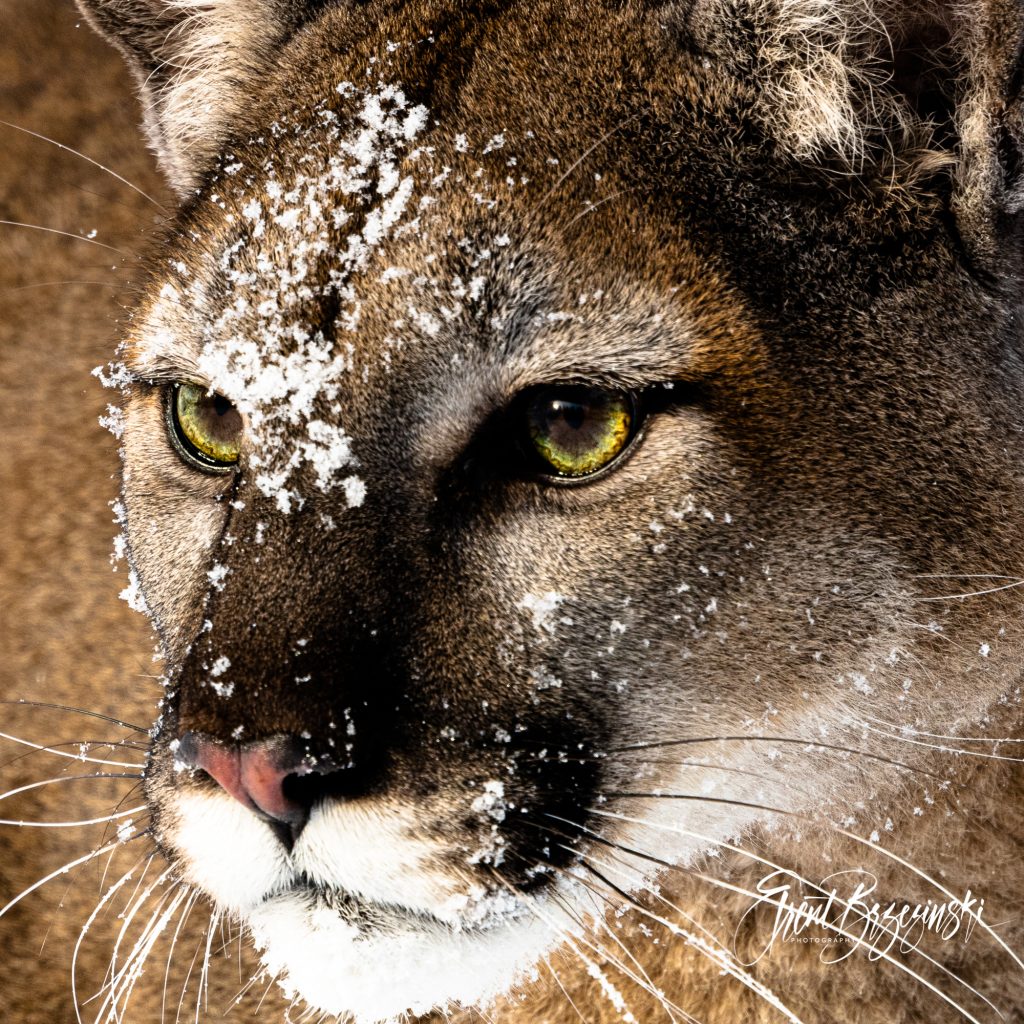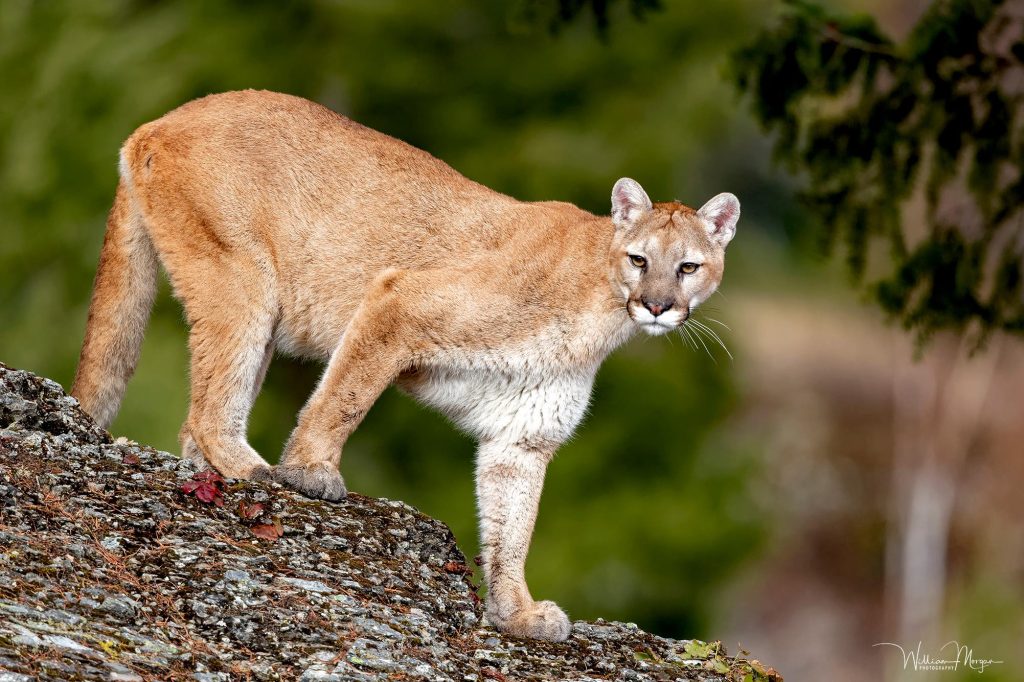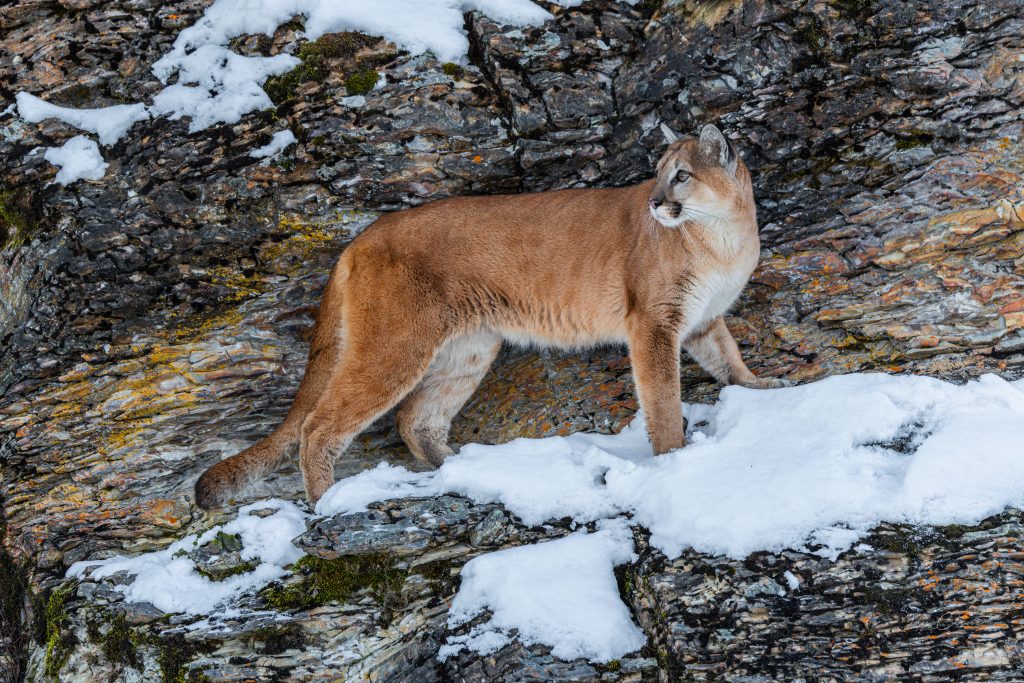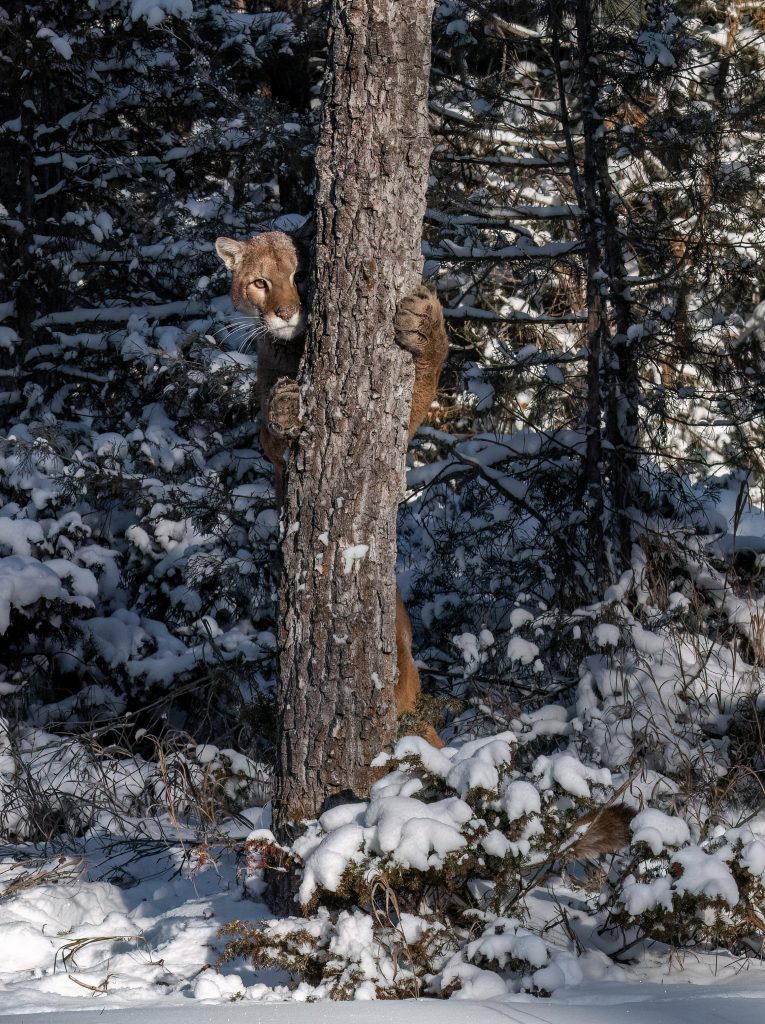
Experience the thrill of photographing one of the North America’s most iconic predators – a mountain lion – in a breathtaking natural setting. At Triple D, our professionally trained mountain lions offers photographers the rare opportunity to create striking, lifelike images that showcase its power, grace, and wild spirit. Whether you’re an experienced wildlife photographer or just beginning your journey, this session delivers an unforgettable experience and portfolio- worthy shots.
Scientific Name
Puma Concolor
Common Names
Cougar, Mountain Lion, Puma, Panther & Catamount
Description
Mountain lions are a large wild cat, typically weighing between 75 to 250 pounds. They have a long, thick tail, and a distinctive, short, tawny or reddish-brown fur. Their underbelly is white or cream-colored. Their face is relatively short and wide with a powerful jaw, sharp teeth and strong legs. Their ears are small and rounded, and they have distinctive, wide-set, and piercing eyes, that can be yellow, green or brown. Mountain lions have large paws that are covered in fur, which allows them to move silently and stealthily through the wild. Overall, mountain lions have a strong, muscular build and are well adapted for hunting and surviving in a wide range of habitats.
Filming Site
There are several filming sites available, each offering a different experience. The season and activity determine if a filming site with a pond, rocky terrain, a ridge with the skyline in the background or a forest setting is used. All sites include trees, brush, open areas, and logs.
When Should You Visit
Mountain Lions are active all year, each season offers a unique photographic opportunity. Mountain Lions near water in the summer, on snow in the winter, and amongst the autumn colors in the fall. Late spring/early summer baby sessions may offer Mountain Lion cubs. Ideal Mountain Lion in a tree photography occurs after the leaves have fallen.
What To Expect
The Mountain Lion begins the session with a lot of energy, exploring the filming location. Shutter speed is a priority to capture the action. During this period of high activity, the Mountain Lion may run, jump, and possibly exhibit some stalking behaviour The trainers will work the Mountain Lion around the site, taking advantage of the natural features including trees and logs.
As the session progresses the Mountain Lion will slowly burn off its excited energy. Slower shutter speeds and apertures with more depth of field can be used. There may be an opportunity at a site with water to photograph a reflection of the Mountain Lion drinking. Towards the end of the session the Mountain Lion may pose in front of the photographers.
What You Should Know
Basic skills with your camera to:
- Use higher shutter speeds and continuous auto focus to
- Set exposures for various conditions ranging from bright sunlight to shade; photographic action.
If you use a polarizer, you should be able to adjust the filter for the desired effect.
What You Should Bring
Mountain Lion movement may be quick or in a shady spot, therefore a larger aperture is more beneficial than focal length. The distance to the Mountain Lion will vary, at times being quite close, thus a zoom lens is more versatile than a large prime lens. A 70-200 f2.8 works well in all situations. A 100-400 (or 80-400) will bring the Mountain Lion closer, allowing for some intimate portraits.
Extra batteries and memory cards as there is nothing worse than running out. Unlike searching in the wild, a Triple D Mountain Lion model is present throughout the entire filming session and many photographers take more photos in several minutes than they would in an entire day.
A second camera:
- Provides a backup should an equipment failure occur;
- Allows you to continue the session when a battery is depleted or a memory card is full;
- Allows you to continue when your buffer is full;
- Can be equipped with different lenses (wide angle to telephoto) to capture a range of compositions;
- Can be set with a different exposure to easily transition between darker exposures and high-speed action.
First time attendees are often surprised by the large number of photographs they capture. Secondary storage devices are recommended.
A circular polarizing filter may enhance water reflections.
If you prefer using a tripod or monopod than a quick release system is recommended as you may want to handhold your camera to capture some of the action.
The west side of the Rocky Mountains can experience precipitation year-round, ranging from rain to sleet to wet snow. Rain protection for your equipment will reduce your anxiety in these situations.
What You Should Do
Bring everything you need, including memory cards and batteries, to the photo session. You cannot leave the shooting compound once filming begins.
We’ve all done it one time or another, we’ve all been guilty of chimping. Minimize chimping during the photo session as it decreases battery life and increases the likelihood of missing a great shot.
Staying together as a group helps the trainer guide the Mountain Lion to look in your direction. Consider slowly moving within the group to capture photos from a different perspective and allow others to photograph from your position.
Mountain Lions are large predators and all participants must remain standing for the entire session. Keep spare batteries and memory cards in your pockets as bending down to retrieve something from a bag is not permitted.
Do not call out to the Mountain Lion or make any noises in order to get its attention. A successful session is only possible when the Mountain Lion is focused on the trainer.
Silence your phone and do not answer or make phone calls.
Participant covenants and agrees that it will not photograph nor distribute, publish or make public in any manner photographs of:
(1) Any of Providers facilities,including, without limitation, cages, pens, or exercise areas;
(2) Any of the Subject Models when on a leash or in cages or pens;
(3) The Trainers or any of Provider’s employees, either with or without the Subject Models without Providers prior written authorization.